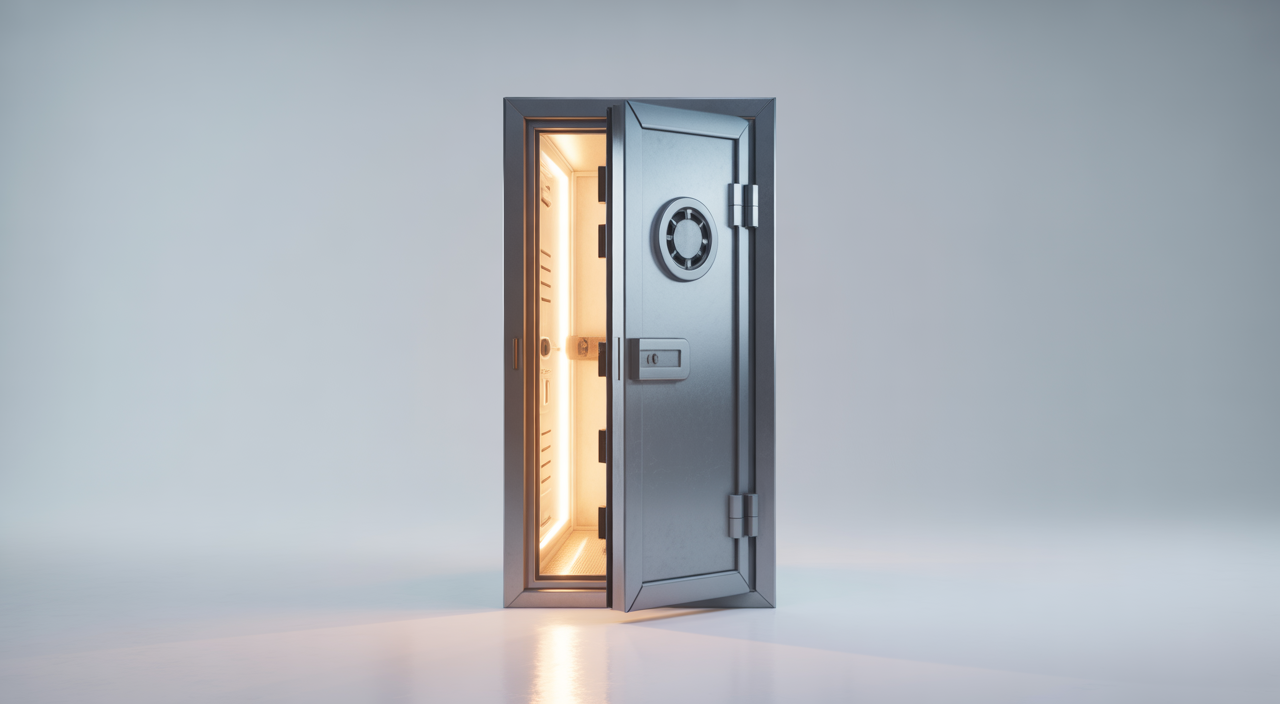
Is Your Home Truly Safe? Discover the Power of Residential Safe Rooms
Do you ever worry about the safety of your family or your most valuable belongings? In an unpredictable world, feeling secure at home is more important than ever. Many homeowners are looking for the ultimate level of protection, a private sanctuary designed to keep them safe from various threats. This is where residential safe rooms come into play.
A residential safe room is not just a reinforced closet. It is a specially constructed space within your home. It offers extreme protection against dangers like home invasions, severe weather events, and other emergencies. This guide will walk you through what makes a safe room truly secure, focusing on its most critical component: the door.
Why Invest in a Residential Safe Room?
Having a safe room offers peace of mind. It provides a dedicated spot where you and your family can go during a crisis. Let’s look at the main reasons why a safe room is a wise investment for your home.
Protection Against Home Invasion and Active Threats
During a home invasion, every second counts. A safe room provides a secure place to retreat. It buys valuable time for law enforcement to arrive. A well-designed safe room can deter intruders or make it impossible for them to reach you.The door, especially, plays a huge role here. An armored safe room door can withstand powerful attacks. It keeps you safe inside while help is on its way.
Shelter from Severe Weather
Many parts of the world experience extreme weather. Tornadoes, hurricanes, and earthquakes can strike unexpectedly. A safe room built to FEMA standards acts as a robust storm shelter. It protects against high winds, flying debris, and structural collapse.The right door for a storm shelter must be able to resist intense pressure and impact. This ensures the entire room remains a secure emergency shelter.
Asset Protection and Privacy
Beyond personal safety, a safe room can also protect your valuables. Important documents, precious jewelry, firearms, and other irreplaceable items can be stored there. It adds an extra layer of security beyond a typical home safe.It can also serve as a private retreat. This space might be used for sensitive work or simply a quiet place away from the world. The vault-like security of its door means your privacy is truly guarded.
Anatomy of a Residential Safe Room: Beyond Just Walls
A safe room is a system, not just a single feature. Its strength comes from the careful combination of several elements. These include reinforced walls, a sturdy ceiling, and a solid floor. Proper ventilation and communication systems are also vital.But even the strongest walls are useless without an equally strong entry point. This brings us to the most crucial part: the safe room door.
The Heart of Security: The Safe Room Door
The door is often the weakest point in any secure area if not chosen carefully. A standard door, even a strong one, is no match for a determined attacker or a powerful storm. This is why specialized armored safe room doors are essential. They are designed to be impenetrable.For a wide range of specialized residential safe room doors designed for superior protection, explore our selection of armored doors. These doors are built with advanced materials and engineering.
Deconstructing the Door: Key Features of Armored Safe Room Doors
What makes an armored safe room door so effective? It’s a combination of advanced materials, complex locking systems, and robust structural components. Each part works together to create an unyielding barrier.
A. Material Science: What Makes Them Impenetrable?
Armored doors use special materials. They are much stronger than regular doors.
- Multi-layered Steel Construction: These doors often have several layers of thick steel. The gauge and type of steel are carefully chosen for maximum strength.
- Ballistic-Rated Composites: For protection against firearms, special composite materials are used. These can stop various bullet calibers, offering ballistic protection.
- Proprietary Infill Materials: Unique materials are often placed between steel layers. These can add soundproofing, thermal insulation, and extra resistance against drills or cutting tools.
B. Locking Mechanisms: Beyond the Simple Deadbolt
The lock system on an armored door is far more advanced than a standard deadbolt. It’s designed to withstand extreme forced entry attempts.
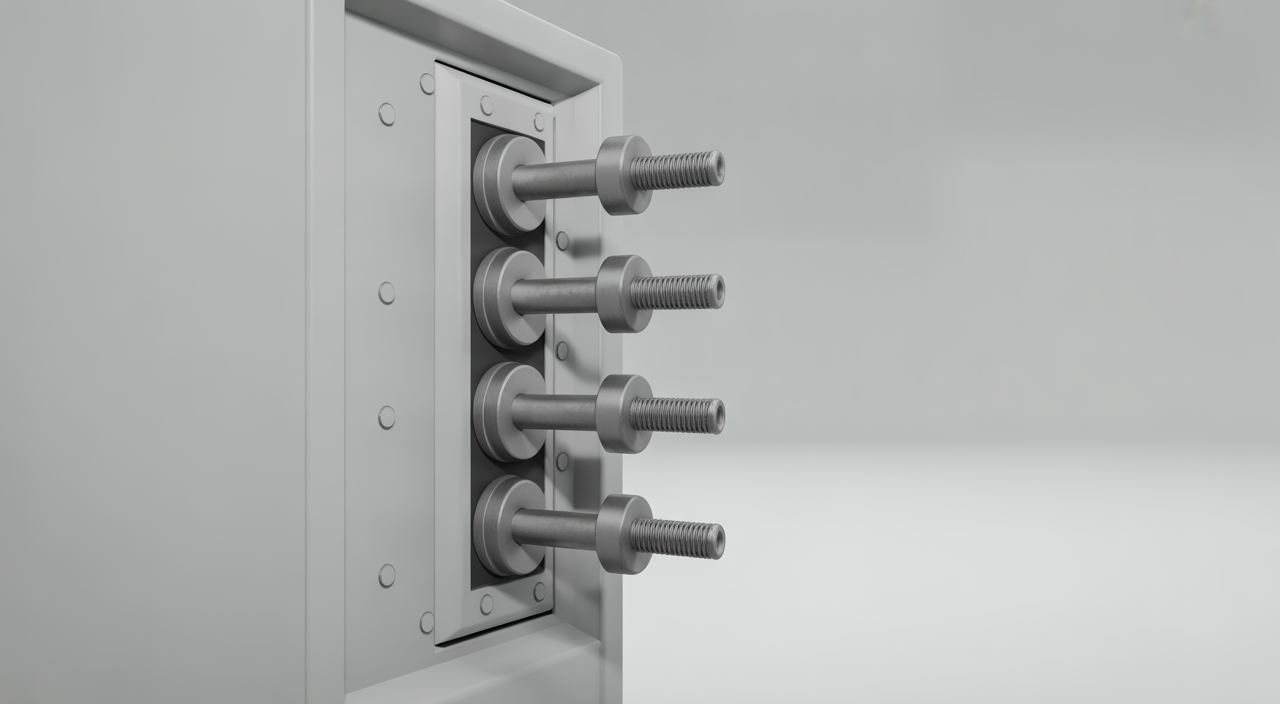
- Multi-Point Locking Systems: These locks secure the door at several points along the frame. When engaged, multiple bolts extend into the frame, making it nearly impossible to pry open.
- Vault-Style Mechanical Locks: Similar to bank vault locks, these provide heavy-duty, mechanical security. They are reliable and resistant to electronic tampering.
- Electronic & Biometric Access: Some doors offer keypads, fingerprint scanners, or other high-tech entry methods. These provide quick, convenient access for authorized users.
- Emergency Egress Systems: All safe room doors must allow for easy exit from the inside. This is a critical safety feature.
C. Hinges & Frames: The Often-Overlooked Fortifications
Even with a strong door slab and lock, weak hinges or a flimsy frame can be a major vulnerability. Armored doors address these points head-on.
- Heavy-Duty Ball Bearing Hinges: These hinges are built to support immense weight and resist attack. They often have internal pins to prevent removal when the door is closed.
- Continuous Welded Steel Frames: The door frame is made from robust steel, welded as a continuous unit. It anchors directly into the reinforced wall structure, creating an impenetrable seal.
- Anti-Pry Designs: Many armored doors feature overlapping edges or integrated steel astragals. These prevent pry bars from gaining purchase, effectively blocking forced entry attempts.
D. Certifications & Ratings: What to Look For
Reliable safe room doors come with certifications from independent testing bodies. These ratings prove the door’s ability to resist specific threats.
- UL (Underwriters Laboratories) Ratings: These indicate resistance to forced entry, fire, and bullet penetration.
- NIJ (National Institute of Justice) Ballistic Ratings: These levels (e.g., Level III, Level IV) show the types of ammunition the door can stop.
- FEMA P-361 Standards: For storm shelters, these guidelines ensure the door can withstand extreme wind and impact from flying debris.
Types of Residential Safe Room Doors
Not all safe room doors are the same. They are designed for different levels of security and specific threats.
- Standard Armored Security Doors: These offer enhanced protection against common forced entry methods like kicking, ramming, and prying. You can find powerful forced entry resistant doors that blend security with aesthetics.
- Ballistic Safe Room Doors: Built with bullet-resistant materials, these doors are designed to stop various firearm attacks.
- Blast-Resistant Safe Room Doors: For homes in areas with specific threats, these doors can withstand explosive forces.
- FEMA-Compliant Storm Shelter Doors: Specifically designed to meet federal guidelines for protection against tornadoes and hurricanes.
- Hidden & Discreet Safe Room Doors: These blend seamlessly into your home’s design. They can look like a bookcase, a part of the wall paneling, or a closet. This allows for discreet security.
- Vault Room Doors for Residential Use: These offer the highest level of protection. They are for dedicated vault spaces where maximum security is paramount.
Designing and Installing Your Safe Room Door: Expert Insights
The door’s effectiveness also depends heavily on its design and installation. It’s not a DIY project.
Integration into Home Architecture
Whether you’re building a new home or adding a safe room to an existing one, the door needs to fit perfectly. It should integrate smoothly with the surrounding structure for maximum strength.
Professional Installation is Non-Negotiable
Due to their weight and complex locking systems, armored doors require expert installation. Professionals ensure the door frame is properly anchored and the lock mechanisms work flawlessly. This guarantees the door performs as intended during a crisis.
Door Sizing & Customization
Safe room doors can be custom-made to fit any opening. You can also choose finishes and designs that match your home’s interior. You can even upgrade your home’s security with a door that looks like an ordinary part of your home.
Critical Structural Requirements
The door’s frame must be securely tied into the reinforced walls and floor. This prevents attackers from simply removing the frame. It creates a seamless, impenetrable barrier.
Choosing the Right Residential Safe Room Door for Your Needs
Selecting the right door involves careful consideration. Think about the specific threats you want to protect against.
- Assess Your Primary Threats: Is your main concern home invasion, severe weather, or protecting valuable assets?
- Consider Your Budget: Armored doors are an investment. Prices vary based on materials, features, and certifications.
- Prioritize Certifications: Always look for doors with certified ratings (UL, NIJ, FEMA) that match your security goals.
- Consult the Experts: Work with security professionals who specialize in safe rooms and armored doors. Their advice is invaluable in making the right choice.
Maintenance and Longevity of Your Armored Door
Armored safe room doors are built to last. However, like any high-security system, they benefit from occasional care. Routine checks of the locking mechanisms and hinges ensure smooth operation. Lubricating moving parts can prevent wear and tear. If you notice any issues, it is always best to call for professional service. This ensures your door remains ready to protect you for decades.
Conclusion: The Ultimate Investment in Peace of Mind
Investing in a residential safe room is a significant decision. It is an investment in your family’s safety and your peace of mind. The most important component of this secure space is its door. By choosing a high-quality, professionally installed armored safe room door, you create an unyielding sanctuary within your home.This level of security is more than just a deterrent. It is a promise of protection during the most critical moments. Ready to secure your home and family with an impenetrable residential safe room door? Contact us today for a consultation and explore your options.
Frequently Asked Questions
Q1: What is the main difference between a safe room and a panic room?
A safe room is designed for longer-term protection against various threats, including severe weather, and often includes provisions for ventilation, communication, and supplies. A panic room (sometimes used interchangeably with safe room) traditionally focuses on immediate, short-term refuge from an active threat like a home invasion, emphasizing quick access and concealment.
Q2: How long can one realistically stay inside a residential safe room?
The duration depends on the safe room’s design and provisions. A well-equipped safe room can sustain occupants for several hours to a few days. It needs proper ventilation, a supply of fresh air, emergency food, water, and communication tools. Storm shelters built to FEMA standards are often designed for shorter-term refuge during an event, typically a few hours.

Marin Hùng, a passionate advocate for holistic well-being, is the driving force behind our health-focused platform. With a deep-rooted commitment to promoting a balanced and vibrant lifestyle, Marin brings a wealth of knowledge and experience to our health community. As a dedicated writer and wellness enthusiast, Marin’s insightful articles and expertise are at the heart of our mission to inspire healthier living.












Post Comment